






















Specification Guidance
Cabin Technical Specifications and Why Outline Size Tells You Nothing
A guide to the document a cabin quotation should answer, covering intended use, dimensions, structural criteria, anchorage, envelope assemblies, electrical provision, compliance, and handover records.
- Purpose
- Makes small units comparable and defines the handover
- Coverage
- Use, dimensions, structure, anchorage, envelope, electrical, compliance
- Outcome
- Verifiable requirements, certification, and warranty agreed before order
Cabin Technical Specifications and Why Outline Size Tells You Nothing
A cabin technical specification converts a general description into requirements that can be priced, manufactured, inspected, and compared. It records the intended use, dimensions, structural criteria, envelope assemblies, electrical provision, compliance route, and the handover documentation.
Two cabins of identical outline can differ entirely in insulation, electrical provision, anchorage, and durability. Terms such as insulated cabin, heavy duty, or weatherproof are not comparable between suppliers because they define neither construction nor measurable performance.
The specification also protects the buyer where it still can. Certification, inspection points, warranty scope, spare parts, and maintenance instructions are straightforward to agree before an order and considerably harder to obtain once a unit is delivered and installed.
Small units hide big differences
Two cabins of identical outline can differ completely in insulation, electrical provision, and anchorage. Only a written specification makes those differences visible before purchase.
Wind matters more than size suggests
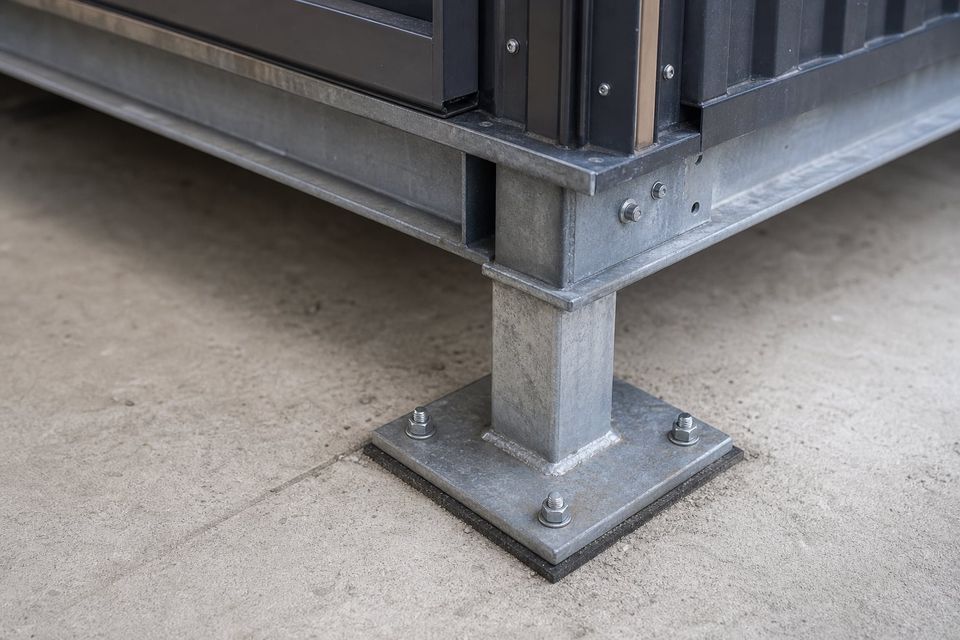
A light unit is unusually sensitive to uplift and overturning, so anchorage and base requirements belong in the specification rather than being settled on delivery day.
Defines the handover
Certification, inspection, warranty scope, spare parts, and maintenance instructions are straightforward to agree before order and difficult to obtain afterwards.
Sections of a Cabin Specification
Each section should be precise enough to be checked on delivery, because a requirement that cannot be verified is a requirement that will not be met.
- 01
Intended Use and Occupancy
Function, number of occupants, operating hours, public interaction, location and exposure, and expected service life.
- 02
Dimensions
External dimensions, internal clear dimensions and height, door and window positions, and any transaction opening.
- 03
Structural Criteria
Design wind actions, any snow load, imposed roof loads, equipment loads, and the actions arising from lifting, transport, and relocation.
- 04
Anchorage and Base
Base or foundation requirement, fixing detail, anchorage against uplift and overturning, and who designs and installs them.
- 05
Envelope Assemblies
Wall, roof, and floor build-ups, insulation type and thickness, vapour and air control, thermal bridging, and airtightness expectation.
- 06
Openings and Glazing
Door type and hardware, glazing specification and performance, seals, security provision, and the method for replacing a pane.
- 07
Electrical Provision
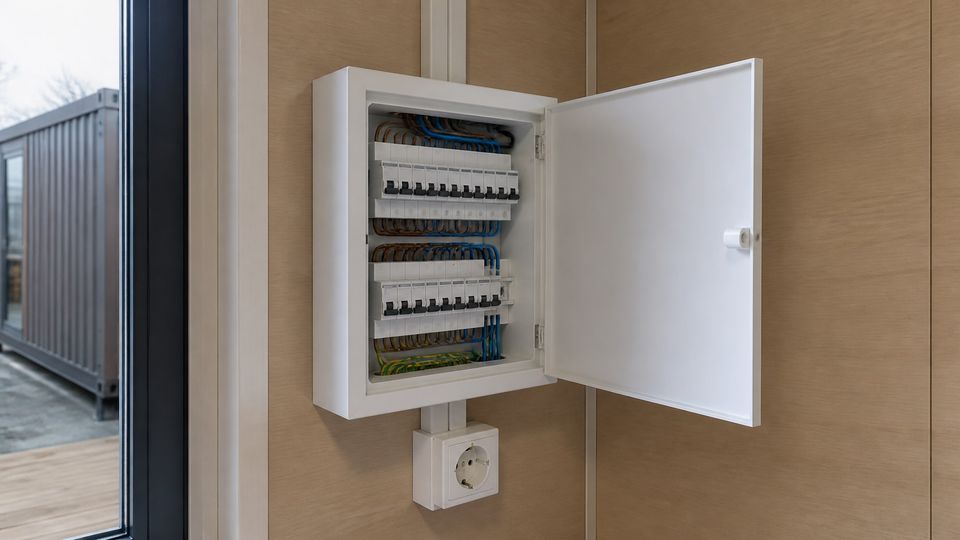
Incoming supply, protective devices, earthing and bonding, circuits, lighting levels, sockets, data, and heating or cooling equipment.
- 08
Compliance and Handover
Applicable standards and certification, inspection points, factory quality records, delivery condition, warranty, and maintenance instructions.
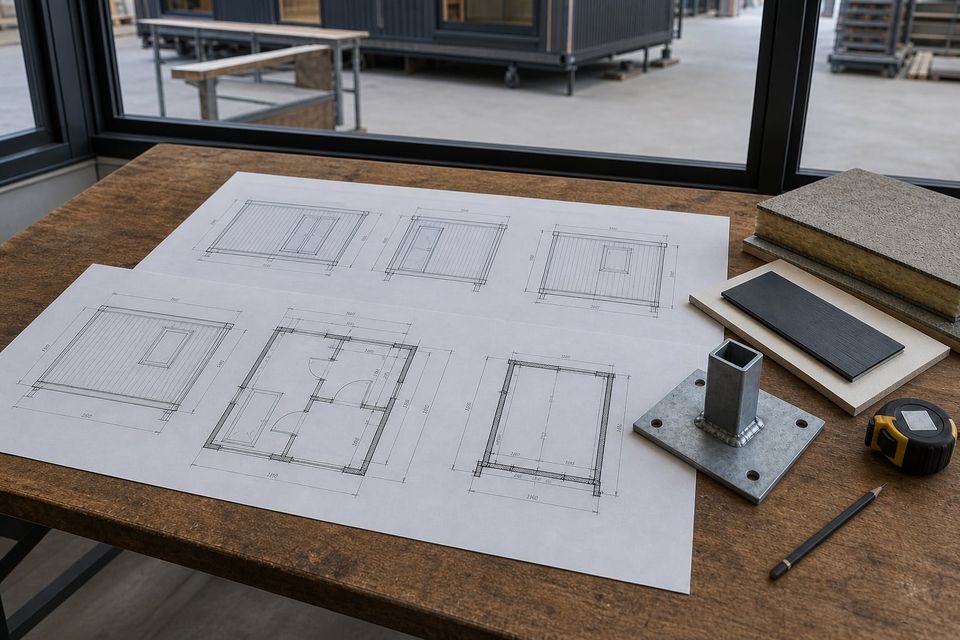
Check the Assemblies, the Anchorage, and the Certification
Start with use and exposure. Function, occupancy, operating hours, whether the public approaches, the location, and the expected service life set everything that follows, and a specification that omits them is describing a product rather than answering a requirement.
Then check whether the envelope is described as assemblies. Useful information covers complete wall, roof, and floor build-ups with insulation type and thickness, vapour and air control, and thermal bridging at corners and openings, not a single product name.
Look for lifting and relocation. Small units are moved far more often than buildings, so lifting points, permitted lifting methods, transport restraint, and any restriction on repeated relocation should be recorded rather than assumed to be unlimited.
Finally, check certification and handover. The specification should identify the applicable standards and any required certification for fire behaviour, ballistic or attack resistance, electrical safety, or accessibility, state which party obtains local approvals, and list the records, warranty, and maintenance instructions issued.
Verifiable Requirements for a Small Unit
A cabin specification is useful when every requirement can be measured or inspected on delivery, and someone is named to verify it.
Adjectives are not specifications
Terms such as insulated cabin, heavy duty, or weatherproof are not comparable between suppliers because they define neither construction nor measurable performance. Values and standards replace them.
Assemblies rather than isolated products
Useful information describes complete wall, roof, and floor build-ups with insulation type and thickness, vapour and air control, and thermal bridging at corners and openings.
Lifting, transport, and relocation
Small units are moved more often than buildings. Lifting points, permitted lifting methods, transport restraint, and any limit on repeated relocation should be recorded explicitly.
Electrical load from real equipment
Circuits, protective devices, and cable sizing should reflect the maximum current the cabin will actually draw including heating or cooling, with inspection and testing certification issued at handover.
Certification for the use
Fire behaviour, ballistic or attack resistance, electrical safety, and accessibility each carry their own applicable standards, and the specification should state which apply and who obtains approval.
Quality and delivery condition
Inspection points, factory quality records, the condition the unit arrives in, damage reporting, installation responsibilities, commissioning, and training complete a usable document.
What Should Be Agreed Before a Cabin Quotation?
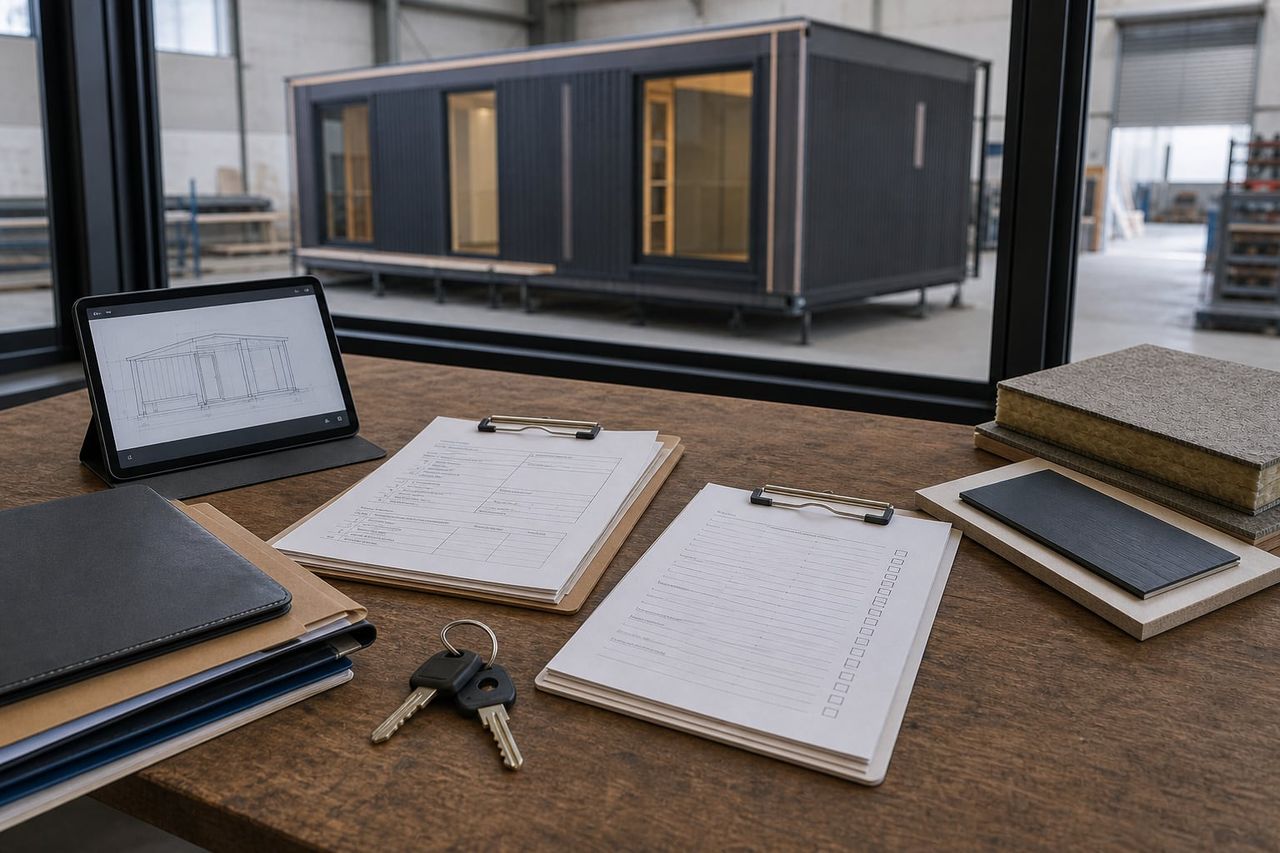
A meaningful quotation answers a specification covering use, dimensions, structural basis, anchorage, envelope assemblies, electrical scope, compliance, and handover. Comparing outline sizes and prices compares almost nothing.
01Use definition
Function, occupancy, operating hours, public interaction, location and exposure, and expected service life at the position.
02Dimensional data
External and internal clear dimensions, height, opening positions, transaction provision, and internal partitioning.
03Structural basis
Design wind and snow actions, imposed and equipment loads, lifting and transport actions, and the verifying party.
04Base and anchorage
Base or foundation requirement, fixing detail, anchorage design, and the boundary of responsibility for those works.
05Envelope specification
Wall, roof, and floor assemblies, insulation, vapour and air control, thermal bridging, glazing, and door specification.
06Electrical scope
Supply, protective devices, earthing and bonding, circuits, lighting, sockets, data, equipment, and certification issued.
07Compliance requirements
Applicable standards, required certification for the use, who obtains local approvals, and the evidence provided.
08Handover and aftercare
Inspection points, quality records, delivery condition, commissioning, training, warranty scope, spares, and maintenance instructions.
Build a clear, comparable project scope.
Choose the Cabin It Describes
Panel Cabin Technical Specifications
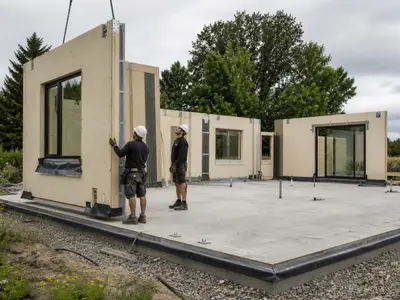
Read the panel-specific requirements where sandwich panel construction is being specified.
Metropol Cabin Technical Specifications
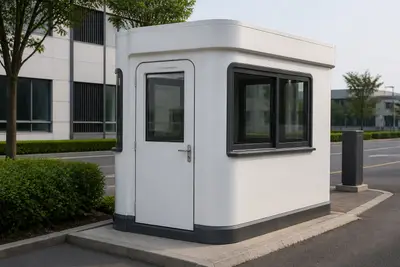
Read the aesthetic cabin requirements where appearance and comfort both have to be defined.
Fiberglass Cabins
A moulded shell with no panel joints, in a wide standard size range for staffed positions.
Spacious Cabins
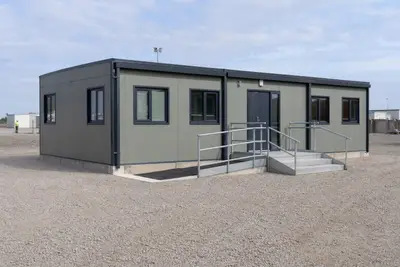
Demountable units for larger enclosed areas, joined together where more space is required.